
Ramadan 2026 Complete Guide: Suhoor, Iftar, Prayers, Events
Ramadan is just arond the corner, and Muslims worldwide are preparing to welcome the blessed month with devotion, reflection, and community spirit. In this Ramadan 2026 complete guide, we’ll cover everything you need to know about Ramadan, including start and end dates through an Islamic calendar for Ramadan, prayer times like suhoor and iftar routines, Taraweeh prayers happening in your nearby masjid, specific duas, Zakat, and local masjid traditions, events and activities.
Whether you’re observing Ramadan in a familiar city or a new location, it’s important to have accurate guidance on suhoor, iftar, nightly prayers, charity and community activities from trusted platforms like CMZ (ConnectMazjid).
Understanding What Is Ramadan & Why It Matters in Islam
Ramadan is the ninth month of the Islamic calendar, observed by Muslims as a period of fasting, prayer, reflection, and community service. It commemorates the month in which the Quran was revealed to Prophet Muhammad (ﷺ), making it especially sacred.
Allah says: “شَهْرُ رَمَضَانَ الَّذِي أُنزِلَ فِيهِ الْقُرْآنُ…”
“The month of Ramadan is the one in which the Quran was revealed…”
(Surah Al-Baqarah 2:185)
Fasting, known as Sawm, is one of the Five Pillars of Islam and goes beyond abstaining from food and drink.It is a spiritual practice to increase empathy, self-discipline, and connection with Allah.
The importance of Ramadan is also emphasized through the words of the Prophet Muhammad (ﷺ), who said: “Whoever established prayers on the night of Qadr out of sincere faith and hoping for a reward from Allah, then all his previous sins will be forgiven; and whoever fasts in the month of Ramadan out of sincere faith, and hoping for a reward from Allah, then all his previous sins will be forgiven.” Sahih al-Bukhari 1901
When Is Ramadan 2026? Start & End Dates
Ramadan 2026 is expected to begin on Tuesday, February 17, 2026, and end on Thursday, March 19, 2026, for most Muslims worldwide. Exact dates may vary based on local moon sightings.
To stay aligned with your community: Follow announcements from your local masjid or recognized moon-sighting authorities.
Where to Download Your Local Ramadan 2026 Prayer Timetable
A sample view of our printable Ramadan Calendar 2026 (PDF) is shown below, designed specially for you. Muslims around the world can easily access the Ramadan prayer and fasting timetable, including accurate Suhoor and Iftar timings according to their specific location.
Simply click here to download a personalized region and language-specific Ramadan calendar 2026 (free resource) or quickly download from the list given below.
https://youtube.com/shorts/mUlrdte8GpM?feature=share
Tip: To make it even easier, check out this YouTube tutorial that shows step-by-step how to download your Ramadan Calendar 2026 for accurate timings and your exact location.
Suhoor & Iftar: Times, Rules & Duas
Suhoor is the pre-dawn meal eaten before fasting begins. While no fixed dua is required, making the intention (niyyah) in your heart is sufficient according to authentic teachings.
Iftar occurs at sunset. It is a moment of gratitude and spiritual fulfillment.
Iftar Dua:
ذَهَبَ الظَّمَأُ وَابْتَلَّتِ الْعُرُوقُ وَثَبَتَ الأَجْرُ إِنْ شَاءَ اللَّهُ
Dhahaba Al-Zama Wa’btalat Al-‘uruq Wa Thabata Al-Ajr In Sha AllahTranslation: “The thirst has gone, the veins are moistened, and the reward is assured, if Allah wills.” (Sunan Abi Dawud 2357)
Never miss a fast or prayer again, let CMZ (ConnectMazjid) send you daily suhoor and iftar reminders, available on Play Store and App Store.
Ramadan Fasting Rules – Who Must Fast & Exemptions
Fasting during Ramadan is obligatory for all adult Muslims who are physically and mentally able. However, certain groups are exempt, who cannot fast in Ramadan and can’t make up the lost days afterwards and are required to pay Fidya (explained in the FAQ section). Understanding fasting rules from Ramadan 2026 complete guide helps ensure that fasting is observed safely and in accordance with Islamic guidance.
Who Must Fast in Ramadan:
All adult Muslims who are physically and mentally capable (men and women).
Who is exempt from fasting during Ramadan?
Children who have not reached puberty.
Travelers undertaking long journeys.
Pregnant or nursing women, if fasting may harm them or their child.
People who are sick or have medical conditions that make fasting harmful.
Elderly or frail individuals whose health may be severely affected by fasting.
Mentally unstable individuals who cannot comprehend or manage fasting.
Women during menstruation or postpartum bleeding, as guided by authentic Hadith.
Those experiencing extreme physical hardship, making fasting intolerable.
Things that break fast in Ramadan include intentional eating, drinking, smoking, and Sexual relations during fasting hours.
For full guidance, including detailed rulings about fasting search for trusted sources like IslamQA, Darul Ifta, and authentic fiqh references.
Importance of Night Prayers in Ramadan
Night Prayer (Qiyam ul-Layl):
Night prayers, known as Qiyam al-Layl (“standing in the night”), are voluntary acts of worship performed after the obligatory Isha prayer and before Fajr (dawn). Qiyam al-Layl is a broader term for all voluntary night prayers, including reciting the Quran, performing voluntary prayers like Tahajjud, making dhikr (remembrance of Allah), and offering other forms of devotion.
Hadith on Night Prayer Reward:
“Whoever stands in prayer on Laylatul Qadr out of faith and in the hope of reward, his past sins will be forgiven.” Sahih al-Bukhari 1901
Taraweeh Prayers:
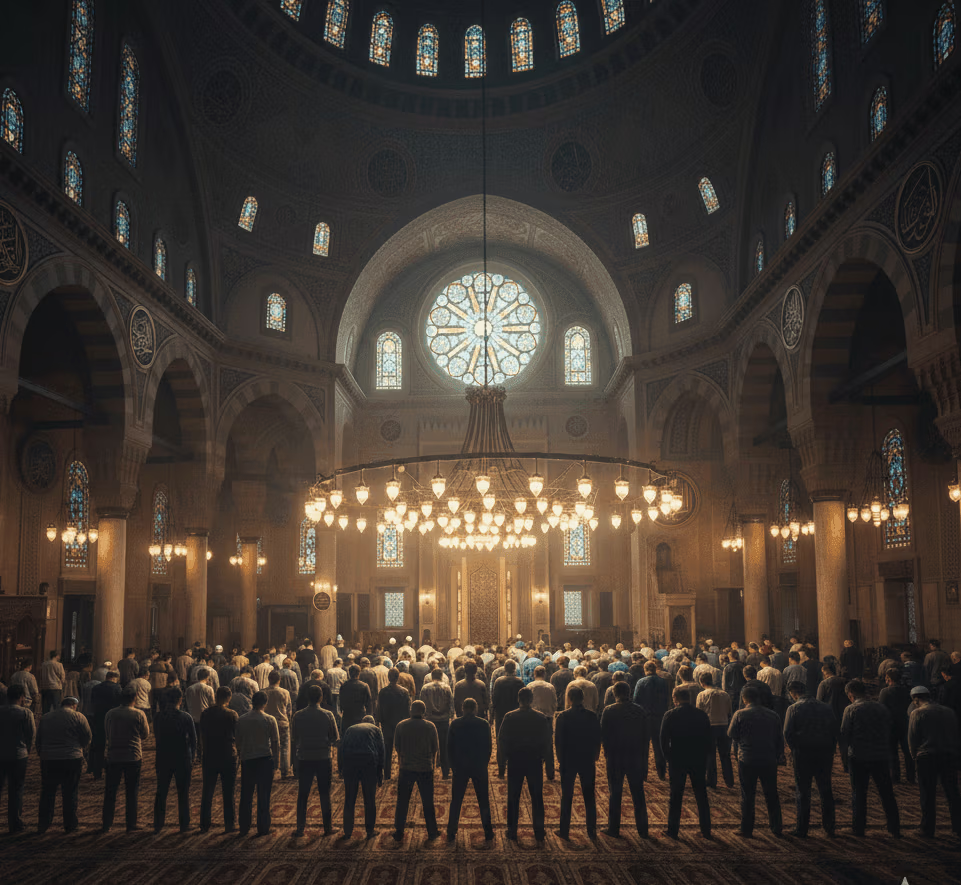
Taraweeh are voluntary night prayers performed exclusively during Ramadan, after the obligatory Isha prayer. They are often performed in congregations at mosques, usually consisting of 8 to 20 rak’ahs, where long portions of the Quran are recited. This allows Muslims to complete the entire Quran by the end of the month.
How to Observe Laylatul Qadr
Laylatul Qadr, also known as the Night of Decree, is one of the most blessed nights in the Islamic calendar, occurring in the last ten nights of Ramadan, most likely on an odd-numbered night. Sahih al-Bukhari 2017 It is the night on which the Quran was first revealed, making it a time of immense spiritual significance.
Worship on this night carries rewards greater than a thousand months. Allah says in the Qur’an: “The Night of Decree is better than a thousand months.” (Surah Al-Qadr 97:3) Muslims are encouraged to:
Perform extra night prayers (Qiyam al-Layl/Tahajjud)
Recite and reflect on the Quran, especially Surah Al-Qadr (97)
Make heartfelt supplications (dua) for themselves, their family, and the Ummah
Engage in dhikr (remembrance of Allah)
Give charity and perform good deeds
Seek forgiveness and sincerely repent
Laylatul Qadr is a night of intense devotion, reflection, and connection with Allah, and observing it properly can bring immense spiritual growth and blessings. Follow this Ramadan 2026 Complete Guide to ensure you don’t miss night prayers, Taraweeh, or Laylatul Qadr.
Preparing for Ramadan – Routine & Productivity
A mindful routine helps protect your energy while deepening your connection with Allah. Stay focused and balanced during Ramadan by following this daily routine:
Wake up for Suhoor and eat mindfully according to the Sunnah
Recite the Qur’an daily (even one ruku with translation and reflection)
Align your work, rest, and worship mindfully with your fasting schedule
Engage in light physical activity or gentle workouts to stay active
Give daily charity, even if it’s small, Allah loves consistency
Establish nightly prayers (Taraweeh, Qiyam, or even two sincer
Follow your mosque and set it as My Masjid on the CMZ app to stay updated with notifications for salah times, events, classes, and Iftar gatherings.
Duas for the 3 Ashras of Ramadan
Ramadan is traditionally divided into three Ashras (ten-day segments), each with a distinct spiritual focus.
| Ashra | Arabic Dua | Translation |
|---|---|---|
| 1st (Mercy) | رَبِّ اغْفِرْ وَارْحَمْ وَأَنْتَ خَيْرُ الرَّاحِمِينَ Rabbi ighfir warham wa anta khayru ar-raahimeen | “O my Lord, forgive me and have mercy, for You are the best of the Merciful.” |
| 2nd (Forgiveness) | اَسْتَغْفِرُ اللهَ رَبِّيْ مِنْ كُلِّ ذَنْۢبٍ وَّاَتُوْبُ اِلَيْهِ Astaghfiru Allah rabbī min kulli dhanbin wa atoobu ilayh | “I ask Allah, my Lord, for forgiveness from every sin and turn to Him in repentance.” |
| 3rd (Salvation) | اَللَّهُمَّ أَجِرْنِي مِنَ النَّارِ Allahumma ajirnī min an-naar | “O Allah, save me from the Hellfire.” |
Purifying Wealth: Zakat and Charity During Ramadan
Zakat
Zakat is obligatory for eligible Muslims who meet the nisab and it is usually 2.5% of qualifying wealth. The Qur’an describes:
إِنَّمَا الصَّدَقَاتُ لِلْفُقَرَاءِ وَالْمَسَاكِينِ وَالْعَامِلِينَ عَلَيْهَا وَالْمُؤَلَّفَةِ قُلُوبُهُمْ وَفِي الرِّقَابِ وَالْغَارِمِينَ وَفِي سَبِيلِ اللَّهِ وَابْنِ السَّبِيلِ فَرِيضَةً مِّنَ اللَّهِ وَاللَّهُ عَلِيمٌ حَكِيمٌ”
“Alms-tax is only for the poor and the needy, for those employed to administer it, for those whose hearts are to be reconciled, for freeing captives, for those in debt, in the cause of Allah, and for the wayfarer, an obligation from Allah. And Allah is All-Knowing, All-Wise.”
(Surah At-Tawbah 9:60)
Key benefits of giving Zakat in Ramadan:
Purifies wealth and protects it from miserliness
Increases spiritual reward
Strengthens community bonds
Supports widows, orphans, and travelers
Charity & Donations
Beyond Zakat, Ramadan is a time to increase voluntary charity (Sadaqah) and support others in need. This can include:
Masjid donations
Suhoor or Iftar drives
Community fundraising campaigns
Supporting local or international charities
How to Donate in Just a Few Simple Steps Using CMZ
Download the app and select a mosque, organization or any charity campaign.
Select a fundraising or donation campaign, enter bank or card details
Pay securely with in seconds
CMZ (ConnectMazjid): Simplifies donations and fundraising campaigns like Suhoor/Iftar drives, masjid donations, and Ramadan charity initiatives.
Masjid Activities, Community Iftars & Events
Plan your community iftars and Zakat donations with help from our Ramadan 2026 Complete Guide. CMZ allows you to discover and register for:
Local mosques hosting Ramadan events: Find by searching masjid near me with programs
Mosque prayer schedule: Daily five prayers, Taraweeh, Jumu’ah and Qiyam al-Layl
Community iftar: Join local gatherings to foster social bonding
Islamic center Ramadan activities: Quran sessions, lectures, youth programs and more!
CMZ Web app allows you to discover and register for masjid programs and iftar events effortlessly.
What Comes After Ramadan – Eid ul Fitr 2026
Eid ul Fitr 2026 is expected on Friday, March 20, 2026 (dates may vary based on local moon sighting), marking the end of Ramadan.
Across the world, Muslims celebrate this day by following cherished traditions such as,
Taking a bath (ghusl) before heading out for Eid prayer.
Wearing clean and presentable clothes and applying perfume.
Eating dates before the Eid prayer “Allah’s Messenger (ﷺ) never proceeded (for the prayer) on the Day of `Id-ul-Fitr unless he had eaten some dates.” Sahih al-Bukhari 953
Giving Zakat al-Fitr before the Eid prayer to purify the fast and help the needy.
Performing the Eid prayer in congregation at the mosque or prayer ground.
Taking a different route when going to and returning from the Eid prayer. “On the Day of `Id the Prophet (ﷺ) used to return (after offering the `Id prayer) through a way different from that by which he went.” Sahih al-Bukhari 986
Greeting one another with words of joy and du‘as.
Giving gifts (Eidi) and spreading happiness, especially among children.
Sharing meals and celebrating with family, friends, and the wider community.
Expressing gratitude to Allah for allowing us to complete Ramadan
CMZ App provides timely notifications for Eid events and prayer locations, keeping your celebrations organized.
Conclusion
Ramadan 2026 Complete Guide will help you in spiritual growth, self-discipline, and strengthening community bonds. By understanding fasting, prayer timings, Zakat, Taraweeh, nightly prayers, special nights like Laylatul Qadr, and Sunnahs of Eid, you can approach the month of Ramadan with clarity and devotion.
From staying consistent with Suhoor and Iftar to Taraweeh, Qur’an recitation, and charity, thoughtful planning helps make Ramadan truly meaningful.With CMZ (ConnectMazjid), access daily prayer times, Ramadan calendars, masjid events, and donation options, keeping your Ramadan organized, connected, and rewarding In Sha’ Allah.
When is Ramadan 2026?
Ramadan 2026 is expected to begin on February 17, 2026 and end on March 19, 2026, depending on moon sighting in different regions.
What & When is Laylatul Qadr 2026?
Laylatul Qadr, known as the “Night of Decree” or “Night of Power,” is the most blessed night of Ramadan and is expected to fall during the last ten nights of Ramadan. It is the night when the Qur’an was first revealed. Worship on this night is better than a thousand months of deeds. Narrated `Aisha: Allah’s Messenger (ﷺ) said, “Search for the Night of Qadr in the odd nights of the last ten days of Ramadan.”Sahih al-Bukhari 2017
What is Zakat and who should receive it?
Zakat is obligatory charity for those who meet the wealth threshold. It should be given to the poor, needy, Zakat collectors, new or non Muslims: whose faith or inclination toward Islam can be strengthened through support and kindness, those in bondage/slavery, debtors, those striving in Allah’s cause, and travelers in need, as mentioned in the Qur’an (9:60).
What is the difference between Fidya and Fitra?
– Fidya is paid by those unable to fast due to valid reasons; feeding a needy person per missed day.
– Fitra (Zakat al-Fitr) is an obligatory charity for all Muslims at the end of Ramadan, regardless of fasting, before Eid prayer. Allah’s Messenger (ﷺ) enjoined the payment of one Sa’ of dates or one Sa’ of barley as Zakat-ul-Fitr on every Muslim slave or free, male or female, young or old, and he ordered that it be paid before the people went out to offer the `Id prayer. (One Sa’ = 3 Kilograms approx.) Sahih al-Bukhari 1503
What is Nisab in Zakat?
Nisab is the minimum amount of wealth a Muslim must possess before Zakat becomes obligatory. The Nisab was set by Allah’s Messenger (ﷺ) at a rate equivalent to: 87.48 grams of gold and 612.36 grams of silver. If your zakatable assets meet or exceed the Nisab and have been held for a full lunar (Hijri) year, you are required to pay 2.5% of that wealth as Zakat. However, knowing how to calculate Zakat correctly depends on the current Nisab values, which fluctuate based on gold and silver prices. Reference: Islamic Relief UK – Nisab