
The answer often lies in islamic prayer calculation methods. Different Islamic authorities use different rules to calculate Fajr, Isha, and sometimes Asr.
That’s why MWL, ISNA, and Karachi prayer timings don’t always match, even in the same city.
So, which method is right for you?
Let’s compare five common methods, understand why prayer times differ, and find the right settings for your masjid.
Managing prayer times for a masjid? Don’t wait until the end of this guide.
Start FREE With ConnectMazjid →Set up your masjid’s prayer schedule, TV displays, and website updates from one place.
What are islamic prayer calculation methods?
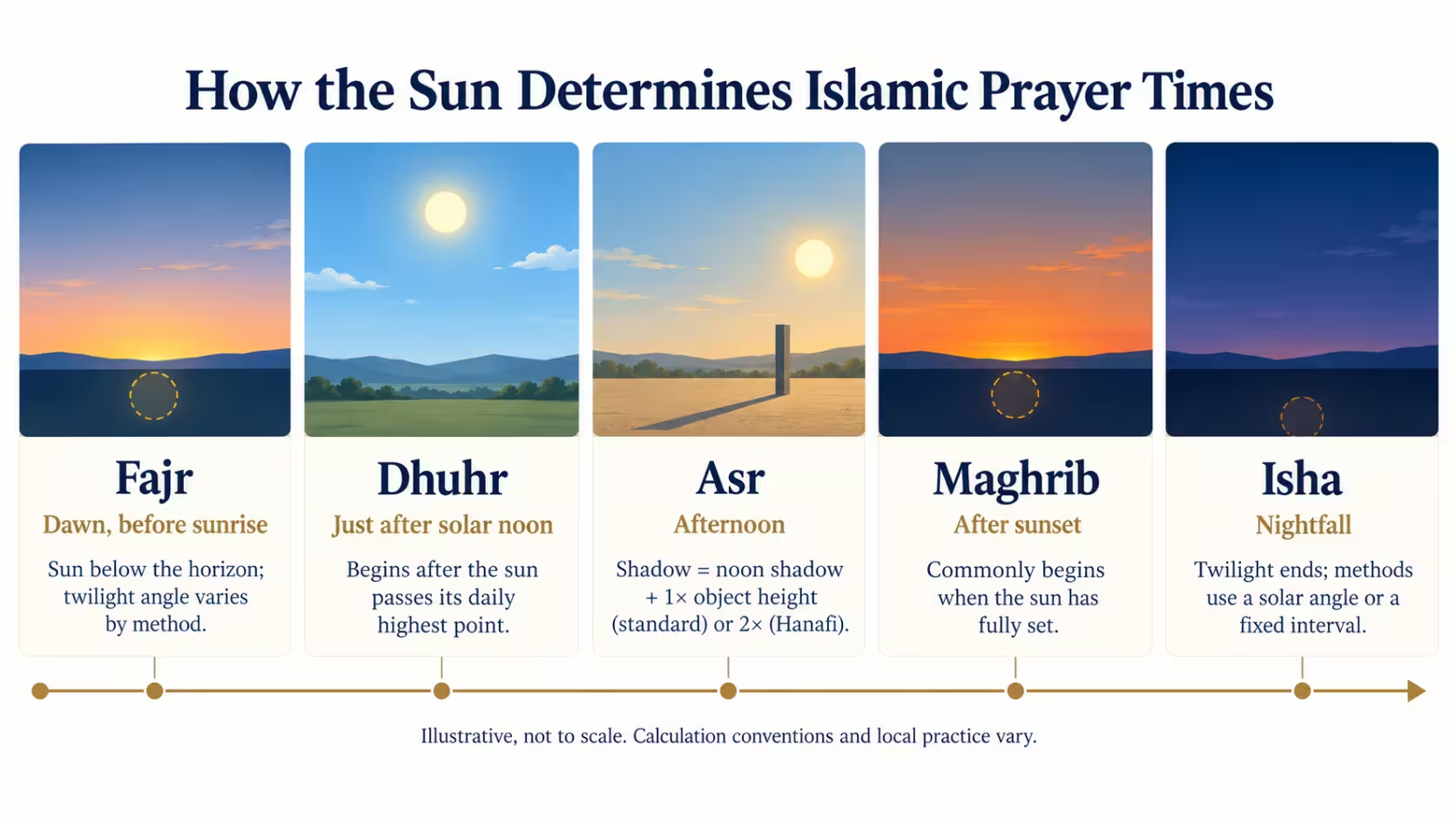
Muslims pray at five prescribed times each day, determined by the sun’s position.
While the sun’s movement is predictable, calculating the beginning of Fajr and Isha involves interpreting twilight.
Different Islamic organizations use different solar angles and conventions to determine when these prayers begin.
For example, an 18° Fajr angle generally produces an earlier time than a 15° angle at the same location.
That’s why understanding islamic prayer calculation methods matters when comparing prayer apps or setting your masjid’s timetable.
If you want to understand the five daily prayers themselves, read ConnectMazjid’s guide to Islamic prayer times.
5 Popular Islamic Prayer Calculation Methods Compared
Not all prayer timetables use the same rules. Here are five widely recognized islamic prayer calculation methods and their commonly published settings.
| Method | Fajr | Isha |
|---|---|---|
| Muslim World League (MWL) | 18° | 17° |
| ISNA | 15° | 15° |
| University of Islamic Sciences, Karachi | 18° | 18° |
| Egyptian General Authority | 19.5° | 17.5° |
| Umm al-Qura | 18.5° | 90 minutes after Maghrib, generally 120 during Ramadan |
These are standard published conventions. Local religious authorities may adopt different settings or adjustments.
Which one should you choose?
MWL is commonly used across parts of Europe, ISNA in parts of North America, Karachi in parts of South Asia, and Umm al-Qura in Saudi Arabia.
However, location alone doesn’t settle the question. Your local masjid may follow a particular religious authority or an approved community timetable.
Why Do Fajr, Isha, and Asr Times Differ?
Two prayer apps can use the same coordinates and still display different timings.
Here’s why.
Fajr and Isha depend on twilight
Fajr begins at true dawn, while Isha begins after the relevant evening twilight disappears.
A calculation using a larger solar depression angle generally produces an earlier Fajr and a later Isha.
Seasonal changes and geographical latitude also affect the difference.
Asr depends on shadow length
Asr has a separate calculation setting.
Under the commonly used Shafi’i, Maliki, and Hanbali rule, Asr begins when an object’s additional shadow equals its height.
Under the commonly used Hanafi rule, the additional shadow must equal twice the object’s height.
Both account for the shadow already present at solar noon.
So, if your Asr time differs from another app, check the Asr juristic setting before changing your entire calculation method.
How to Choose the Right Prayer Calculation Method
If you’re unsure which islamic prayer calculation methods to follow, use this checklist.
-
Follow your local masjid’s guidance.
Ask your imam or authorized mosque committee which calculation convention they use.
-
Check your geographical settings.
Confirm your city, coordinates, time zone, and daylight-saving settings where applicable.
-
Review Fajr and Isha angles.
Make sure your selected method matches your community’s accepted timetable.
-
Confirm your Asr preference.
Check whether your timetable follows the standard shadow-factor setting or the Hanafi setting.
-
Be careful in high-latitude regions.
Some locations experience unusually long twilight periods. They may need special adjustments approved by local religious authorities.
And remember: Athan time and Iqamah time are not the same thing. Athan marks the beginning of prayer time, while the masjid sets the congregational Iqamah schedule.
How ConnectMazjid Helps You Manage Prayer Timings
Choosing the correct method is important. Making sure your community sees the approved timings is just as important.
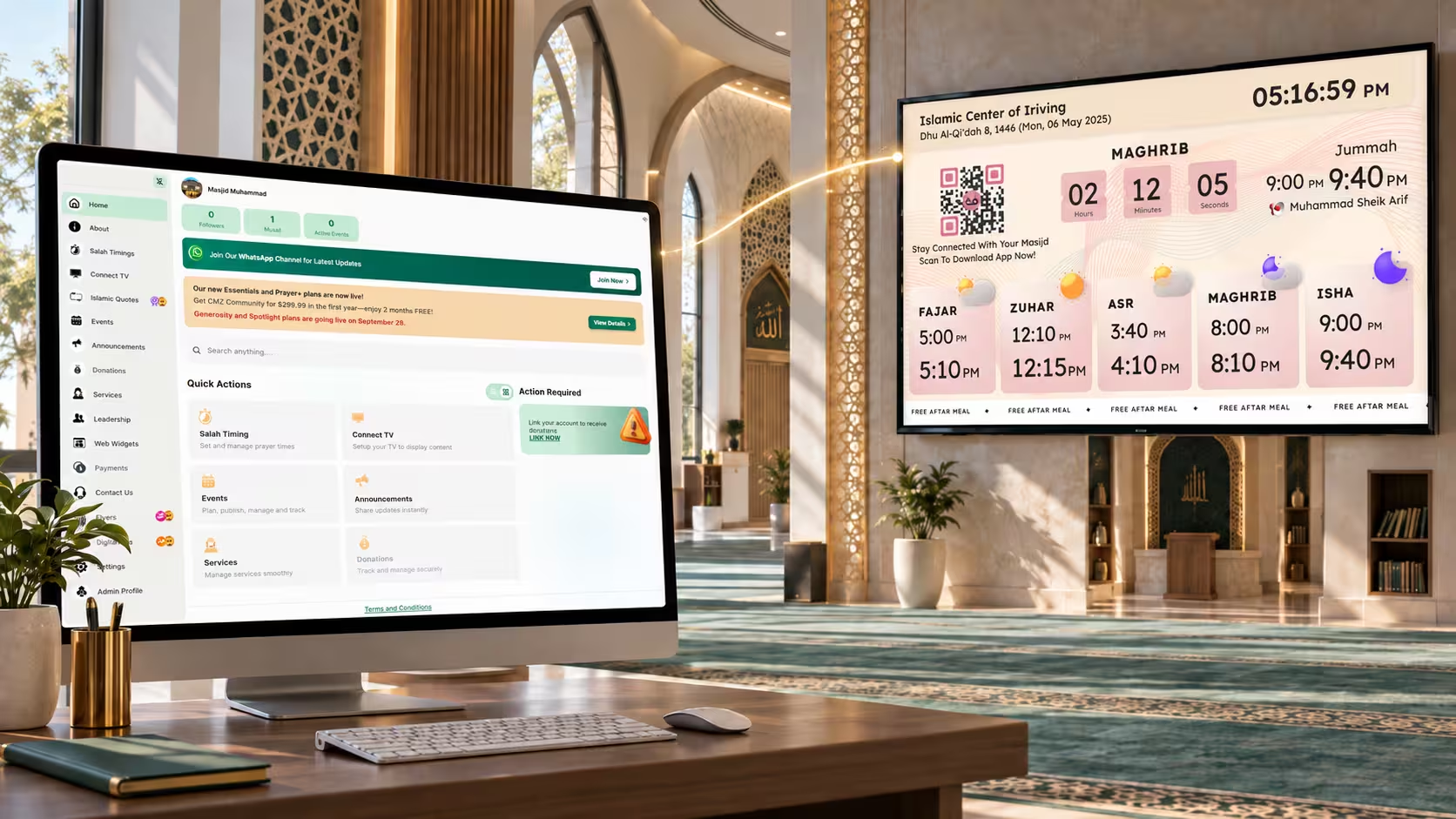
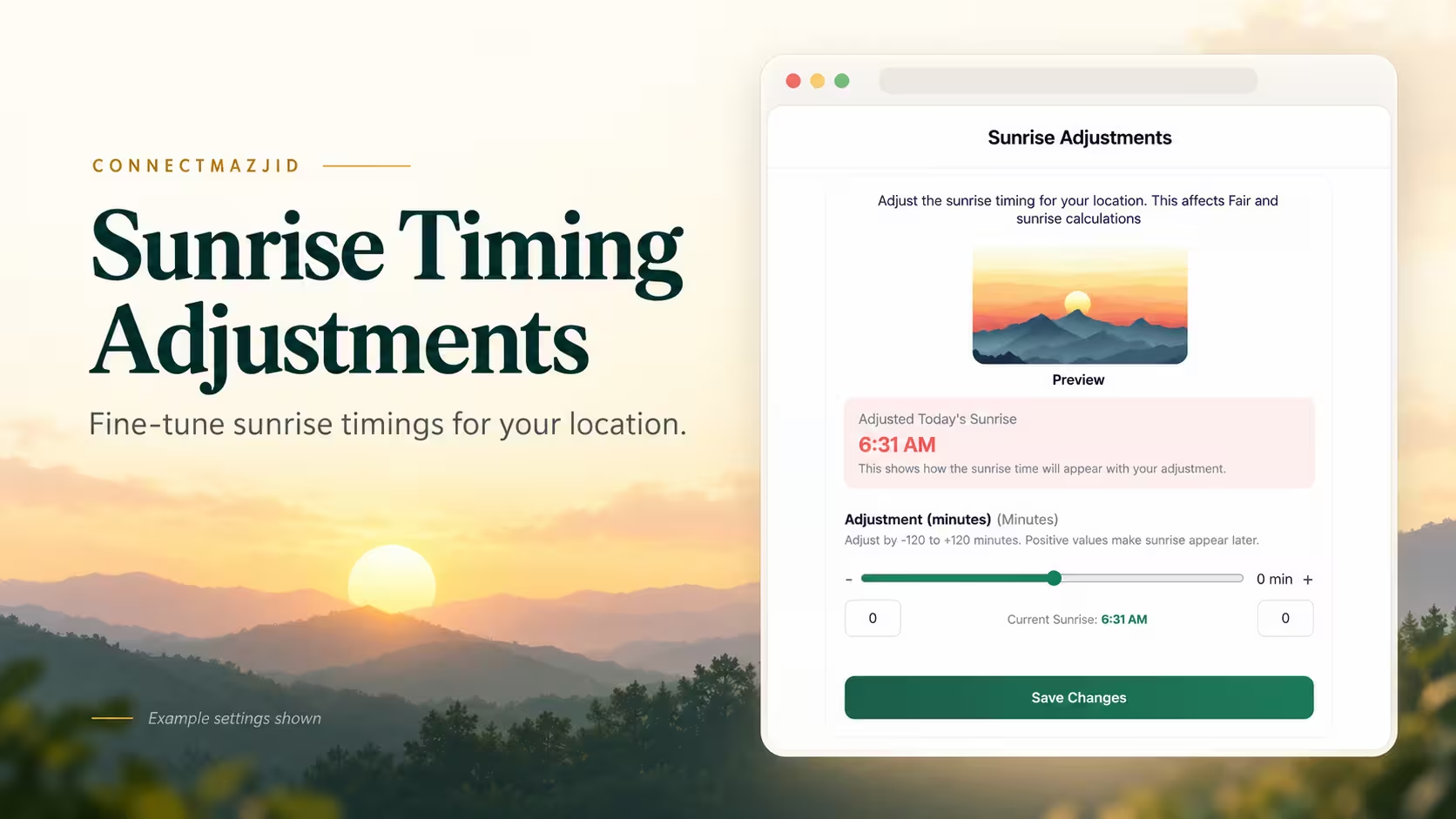
With ConnectMazjid, masjid administrators can manage prayer schedules from one dashboard.
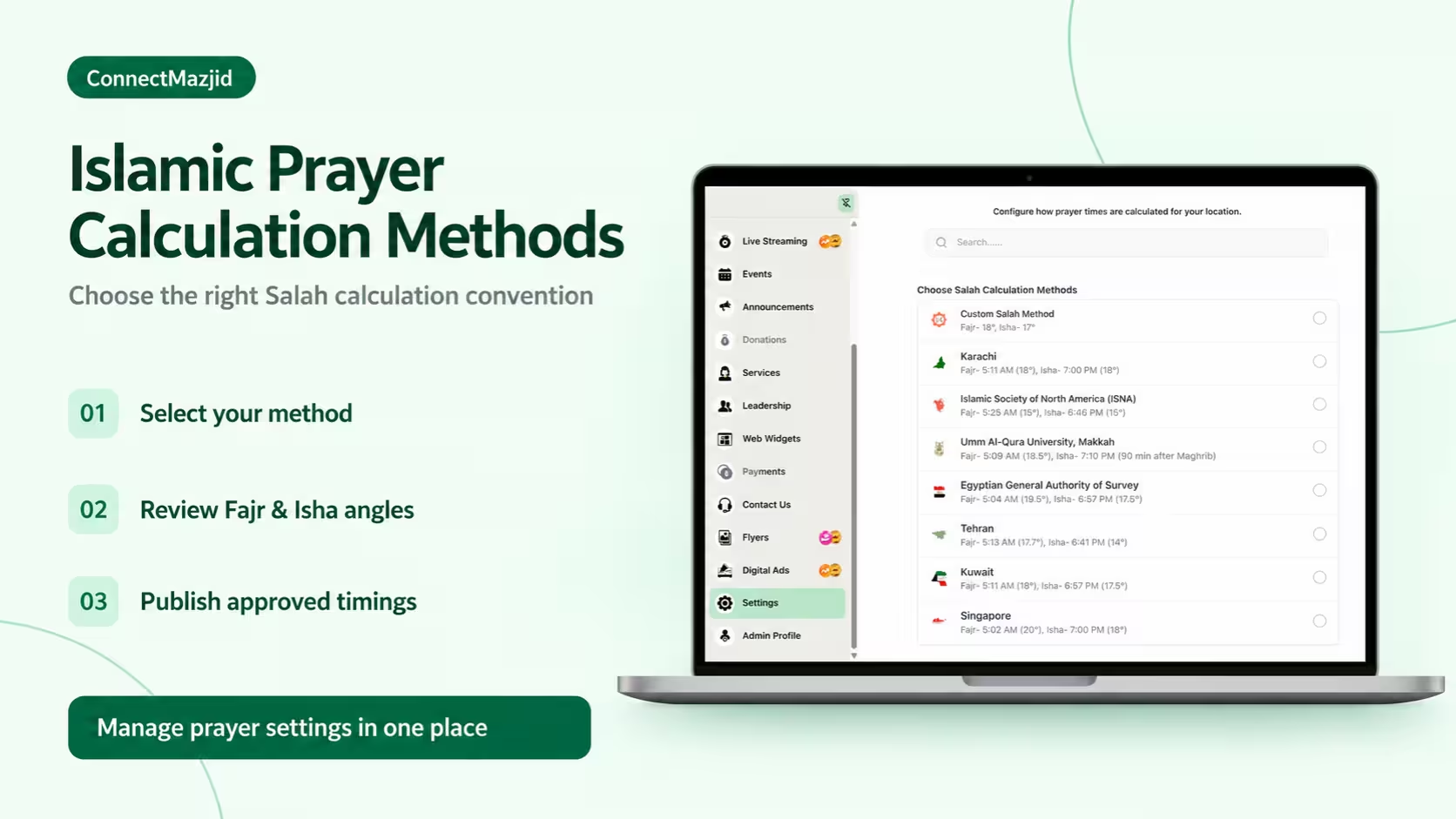
You can:
- Choose the calculation convention your masjid follows.
- Manage Athan and Iqamah times separately.
- Import an existing timetable using Excel or CSV.
- Share updated timings across connected masjid TV displays, mobile apps, and website widgets.
For help checking an approved schedule before publication, read 7 checks to avoid prayer timetable errors.
If your masjid needs an easy way to publish prayer information, explore ConnectMazjid’s mosque screen solution.
FAQs
Why are islamic prayer calculation methods different?
Islamic authorities use different astronomical conventions, particularly for defining the twilight associated with Fajr and Isha.
Which islamic prayer calculation methods are best for my location?
Start with the method recognized by your local masjid or religious authority rather than relying entirely on your app’s default.
What is the difference between MWL and ISNA?
MWL commonly uses 18° for Fajr and 17° for Isha. ISNA commonly uses 15° for both.
Does the Hanafi method affect every prayer?
No. The commonly selected Hanafi Asr setting affects Asr’s starting time, not the Fajr and Isha twilight angles.
Can my masjid use its own approved prayer timetable?
Yes. Your masjid can follow its approved timetable. ConnectMazjid supports importing existing prayer schedules using Excel or CSV files.
Final Thoughts: Choose the Method Your Masjid Trusts
Understanding islamic prayer calculation methods helps explain why prayer schedules differ and how to select settings that reflect your community’s guidance.
Start with your local authority, verify your settings, and make sure everyone sees the same approved timetable.
Ready to simplify prayer-time management?
Create Your FREE ConnectMazjid Account →Manage approved Salah and Iqamah timings from one dashboard and keep your masjid’s connected screens, app, and website informed.